Roulette neDzidzo yeMasvomhu
Vhiri reRoulette rinoita kuti mukana uve nyore kufungidzira. Heino nzira yekurishandisa muchidzidzo musingakurudzire kubheja.
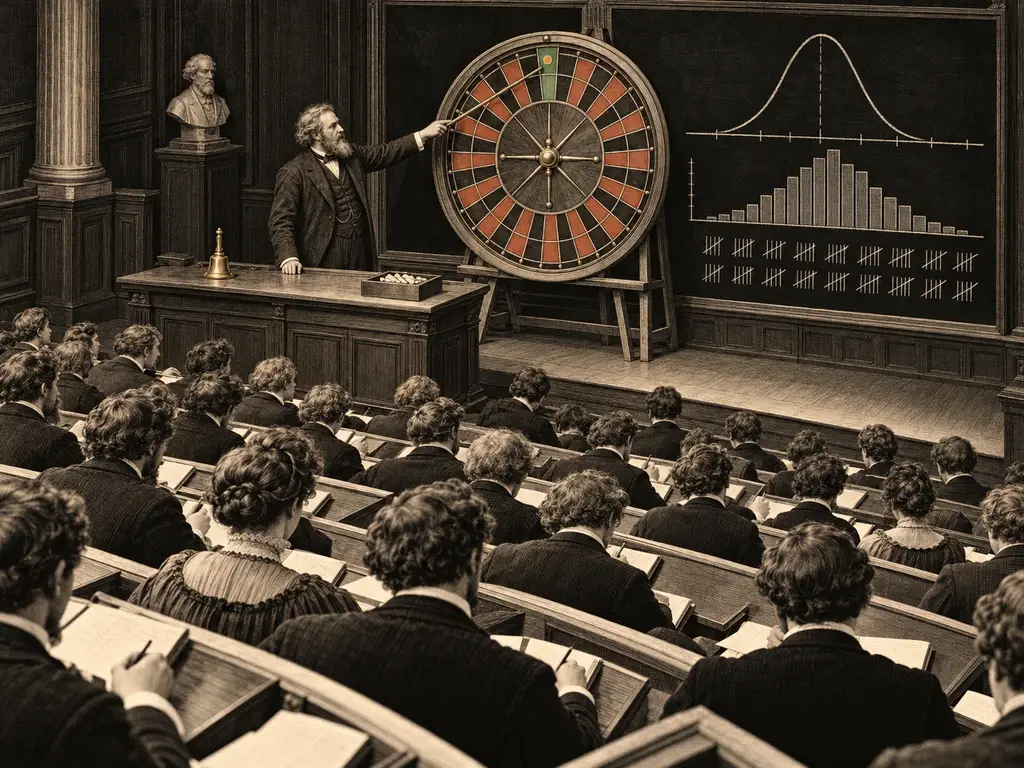
A model with 37 equally likely, independent outcomes connects counting, expectation, variancemasvomhuMusiyanoChiyero chekuti mhedzisiro yakapararira zvakadii kutenderedza kukosha kunotarisirwa. Wakakwirira pastraight up, wakaderera pamabheti emubhadharo wakaenzana.Verengai zvese →, repeated events and hypothesis testing. State the assumptions, use simulated outcomes without real stakes, and distinguish a mathematical result from a claim about how students learn.
Sei Roulette
A fair single-zerovhiriZeroGomba rimwe chete rakasvibira risingafukidzwi nebheti remubhadharo wakaenzana, redozeni kana rekoramu; ndiko kunobva chikamu chekasino. Mamwe mazita: zero imwe, 0.Verengai zvese → roulette model offers 37 outcomes and a convenient payoutmariMubhadharoZvinodzoserwa nebheti rakunda, zvinotaurwa se“X kusvika ku1” pamusoro pemari yakabhejwa inodzoserwa.Verengai zvese → formula. It is one example among many: coins, dice and cards can also illustrate probabilitymasvomhuMukanaMukana wemhedzisiro, kubva pa0 kusvika pa1 kana 0% kusvika 100%. Nhamba imwe: 1/37 = 2.70%.Verengai zvese →, repeated outcomes and statistical tests. Drawing cards with replacement gives a different model from drawing without replacement.
Uniformity and independence are assumptions to examine, not properties guaranteed by a wheel’s appearance. For a standard bet covering n numbers and paying 36/n − 1 unitsmariYunitiMari yehwaro inoshandiswa nesisitimu kana nemutambi. Maprogression anotsanangurwa nemayuniti kuitira kuti ashande patafura ipi zvayo.Verengai zvese → of profit on a win, the expected net result per unit staked is −1/37. Special payouts and zero rules change that result.
Hurongwa hwezvidzidzo
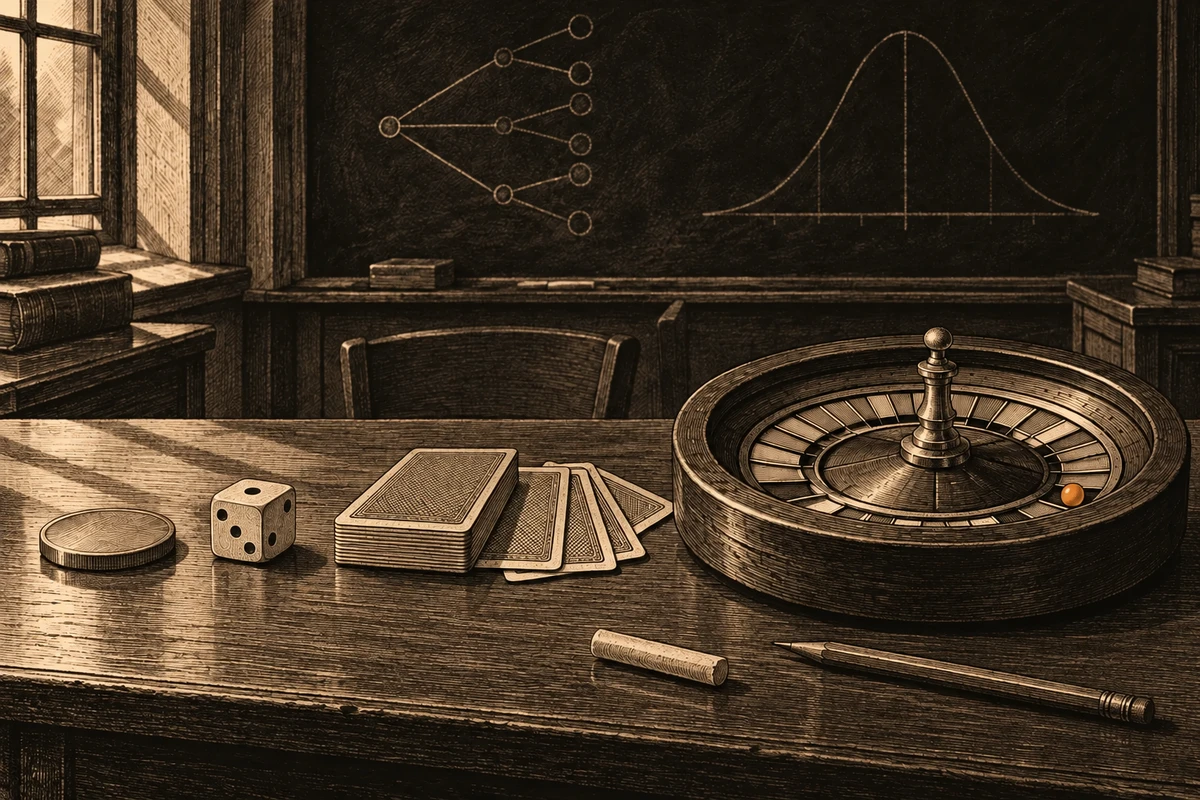
Mienzaniso iyi inofungidzira mhedzisiro dzakazvimirira, dzakaenzana pa0–36 kunze kwekunge zvataurwa zvimwe.
Kudzidzisa pasina kudzidzisa kubheja
Keep real money out of the activity. A spreadsheet or a set of numbered tokens can reproduce the mathematics without a casino setting. Choose the framing for the learners and the institution; a negative-expectation explanation alone does not establish that a gambling-themed activity is suitable for every class.
Ask learners to state the sample space, payout and independence assumptions before calculating. A simulation illustrates variability; one losing session is not a proof that a system fails, and one winning session is not evidence that it works.
Dzidzo dzinoshanda
Compare predictions with calculations, without presenting invented guesses as classroom data. For the birthday problemmasvomhuDambudziko rezuva rekuberekwaVanhu vangani vanodiwa kuti vaviri vangangova nezuva rimwe chete rekuberekwa, kana kuti kutenderera kungani kunodiwa kuti nhamba ingangodzokororwa. Pavhiri remakomba 37, kutenderera 8 kunokwana kuti mukana upfuure hafu.Verengai zvese →, record the first repeat in several simulated sequences and compare the distribution with the exact model. Separate the probability of a repeat by a given draw from the expected waiting time.
For a multiple-comparisons exercise, generate many independent fair histories and record the largest pocketmidziyoGombaImwe yemakamuri 37 ane nhamba parotor. Mamwe mazita: slot, cup.Verengai zvese → count in each. Compare those maxima with the count for one pocket selected in advance. Shuffling a history preserves all pocket counts, so it cannot test whether a high count is unusual under a uniform model.
For staking systems, record the rules, bankrollmariMari yekutambaMari yose yakachengeterwa kutamba. Kutonga mari yekutamba kuri kusarudza kuti mungaisa pangozi yakawanda sei pabheti rimwe nepasesheni imwe.Verengai zvese →, table limittafuraMuganho wetafuraBheti diki nerikuru kupfuura ese anobvumirwa. Rikuru ndiro rinomisa maprogression ekupeta kaviri.Verengai zvese →, stopping condition and total amount wagered. Compare many runs with the appropriate mathematical expectation; do not assume every progressionnziraProgressionMutemo upi zvawo unochinja mari yekubheja zvichienderana nemhedzisiro yakapfuura. Maprogression anokwira mushure mekurasikirwa anoikwidza kana mukarasikirwa; maprogression anokwira mushure mekukunda anoikwidza kana mukakunda.Verengai zvese → has a fixed session win rate.
Kuverenga Nhoroondo Dzekutenderera DzakaburitswaKukosha kweNhamba dzeOngororo
Sei zvichinamatira
A worked example can connect an equation to observable outcomes. Whether this setting improves learning or retention would require educational evidence; anecdotes about memorable casino stories do not establish that. Ask learners to explain the assumptions and transfer the method to a neutral example, such as numbered tokens drawn with replacement.
Mibvunzo
No. Follow the institution’s requirements and the learners’ needs. Neutral numbered outcomes can teach the same mathematics without a gambling setting.
Define the sample space and independence assumptions, calculate a simple expectation, then compare repeated simulated results. The House EdgemasvomhuChikamu chekasinoChikamu chemari yega yega yakabhejwa chinochengetwa nekasino paavhareji: 2.70% muRoulette yeEurope.Verengai zvese → and Variance pages provide worked examples.
Hauna mari chaiyo, hauna maakaundi uye hauna zvinongedzo kune vanoita makasino.
Kuseka zvishoma
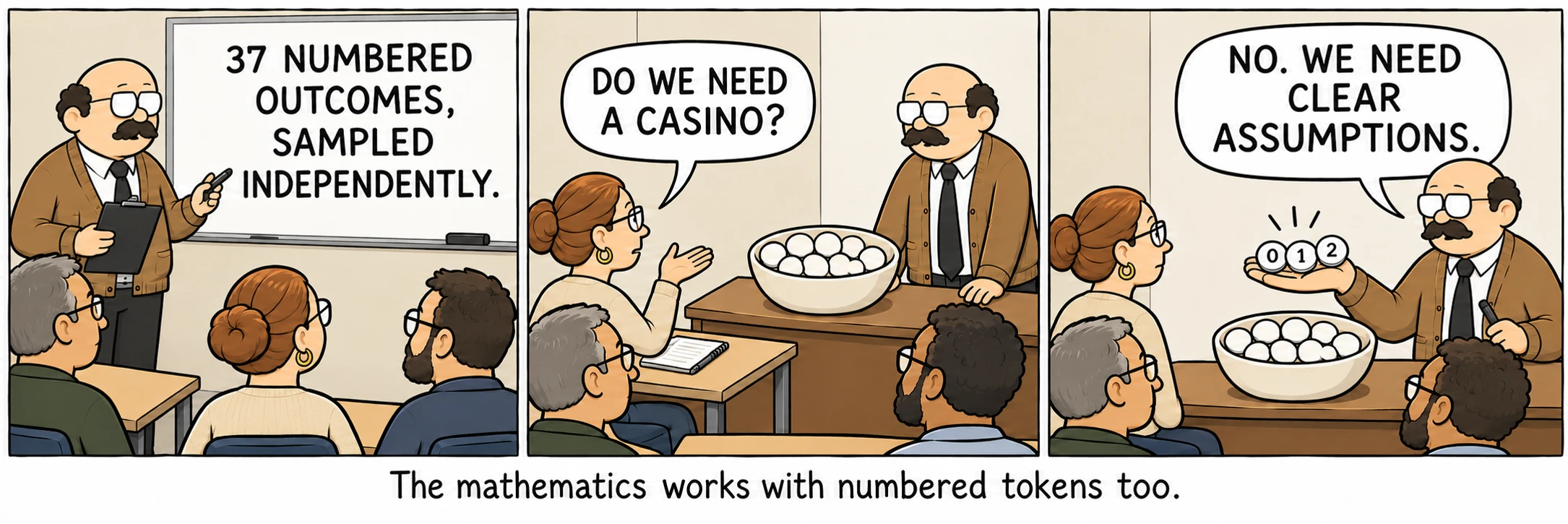
Mhedzisiro makumi matatu nenomwe, chikamu chekasino chimwe, mazana maviri emakore ezvikanganiso zvekudzidza kubva pazviri.
Zvinyorwa
- Feller, W. An Introduction to Probability Theory and Its Applications, Vol. 1.
- Ethier, S. N. The Doctrine of Chances: Probabilistic Aspects of Gambling.